
 Academia Sinica
 Research Brochure
 ASIAA Login

Projects Overview
The vision and objectives of ASIAA have always been to engage in forefront research in astronomy and astrophysics. In order to develop the most important resource on-island, personnel, we strive to construct and to participate in world-class instrumentation, to gain access to all the major facilities in the world, and to play a major role in improving the research environment for graduate education in Taiwan.
In the first ten years of the ASIAA development, we concentrated on developing radio frequency instrumentation and associated science. In the next phase, we will concentrate on developing optical and infrared instrumentation with its associated science and theoretical astrophysics. Our developments will always focus on working on challenging projects which will make scientific breakthroughs possible. By forging to the front in the technical areas, we aspire to be at the leading edge of the scientific developments.
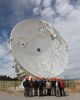
ASIAA continues to operate and upgrade her forefront observational facilities, including the Submillimeter Array (SMA) on Mauna Kea in Hawaii, etc, and ASIAA will continue to provide support for operations. In 2014, ASIAA will install the Trans-Neptunian Automated Occultation Survey (TAOS-2) on San Pedro de Martir in Mexico. In 2014-2015, ASIAA will also deploy the Greenland Telescope (GLT) to Greenland Thule Air Force Base for Submillimeter Very Long Baseline Interferometry (submm-VLBI). In terms of astronomical instrumentation, in 2015-2016, we will complete the infrared spectropolarimeter (SPIROU) together with the Canada-France-Hawaii Telescope, and the Prime Focus Spectrograph (PFS) with the Subaru Telescope. We will continue to develop and enhance theoretical astrophysics in Taiwan. In terms of long range new initiatives, , we will be deploying the GLT in 2016-2017, to the top of the Greenland Summit, establishing the first Arctic Observatory at the new ISI station.



 asiaa.sinica.edu.tw