
 Academia Sinica
 Research Brochure
 ASIAA Login

Transneptunian Automated Occultation Survey (TAOS II)

![[previous]](../_img/_icon4gallery/prev.gif)
![[pause]](../_img/_icon4gallery/pause.gif)
![[next]](../_img/_icon4gallery/next.gif)
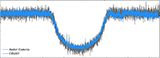







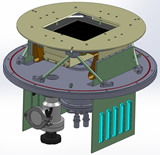


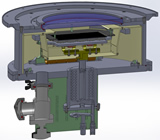
The Transneptunian Automated Occultation Survey (TAOS II), will measure the size distribution of small (diameter 300 m < D 30 km) Trans-Neptunian Objects (TNOs). The TNO size distribution is of scientific interest because it provides important information on the formation and dynamical evolution of the Solar System. Furthermore, the Trans-Neptunian region is the source of the short period comets, and an accurate census of these small objects can help us understand the mechanism by which TNOs are perturbed into cometary orbits. Such objects are impossible to detect directly because they are too faint to be seen with even the largest telescopes. However, when such an object passes in front of a star, the star will "blink out" for a small fraction of a second. The detection and characterization of these occultation events are the primary science goals of this survey.
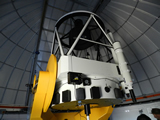
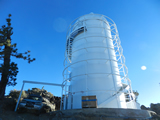
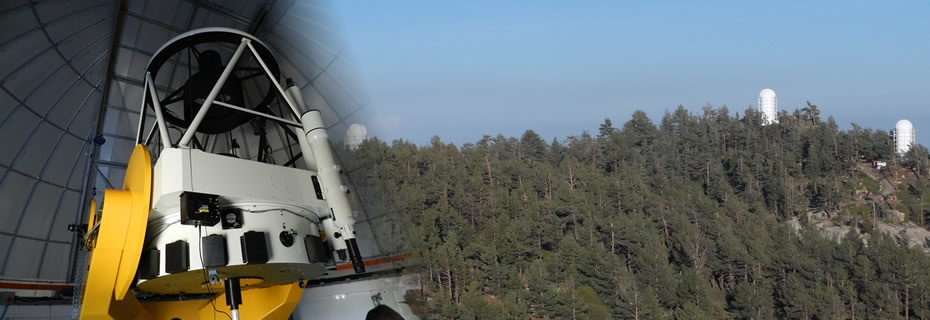
The survey will operate three 1.3 m telescopes at the Observatorio Astronomico Nacional (OAN) at San Pedro Mártir (SPM) in Baja California, México. Each telescope will be equipped with a custom high-speed camera capable of collecting image data on more than 10,000 stars at a readout cadence of 20 Hz. The resulting data volume will be enormous, with over 300 terabytes per year of raw image data.
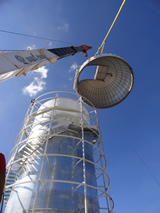
All major construction at the site was completed in 2016, and the telescopes were installed in 2017. The cameras have been delayed due to supply chain interruptions stemming from the COVID-19 epidemic, but they are now on track for completion by the end of 2021. Survey operations are expected to begin in early 2022.

 asiaa.sinica.edu.tw